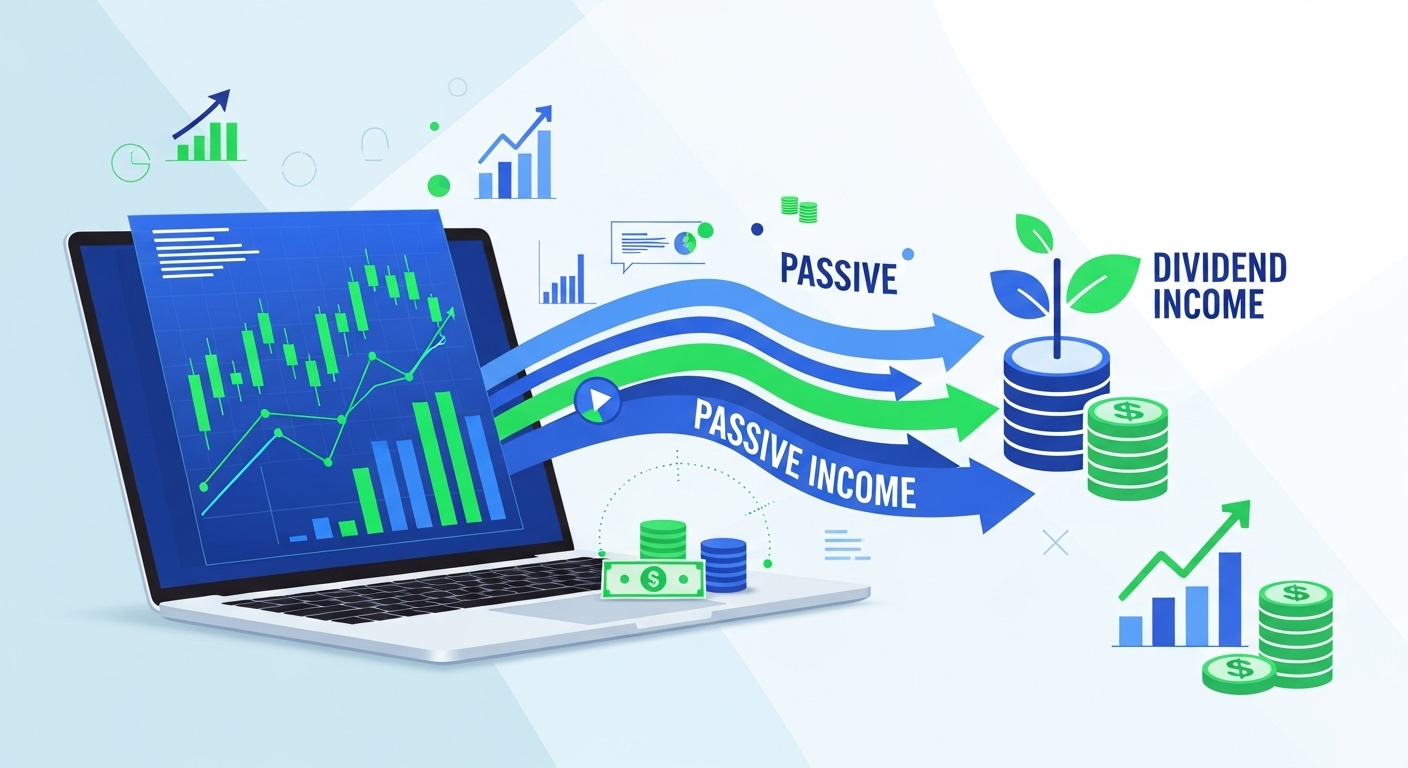
Learning how to invest in stocks and generate passive income is one of the most powerful ways to build long-term wealth. The stock market allows individuals to grow their money over time while earning income through dividends and capital appreciation. With the right strategy, investing can become a reliable source of passive income that supports financial freedom.
Many investors today combine stock investing with other digital income streams such as an online business, affiliate marketing, or even comparing affiliate vs dropshipping models to diversify income. When used together, these strategies can create multiple streams of revenue and reduce financial risk.
This guide explains how beginners can start investing in stocks and build a steady passive income portfolio.
What Is Passive Income from Stocks?
Passive income refers to money earned with minimal ongoing effort. In the stock market, passive income usually comes from:
- Dividend payments
- Long-term capital appreciation
- Dividend reinvestment plans
- Exchange-traded funds (ETFs)
Companies distribute dividends to shareholders as a portion of their profits. Investors who own dividend-paying stocks receive payments regularly, usually every quarter.
For example, if you invest in established dividend companies, your portfolio can generate income even while you focus on building other ventures such as a dropshipping business or scaling an online business.
Why Stock Investing Is One of the Best Passive Income Strategies
The stock market remains one of the most accessible ways to generate long-term wealth. Unlike active income streams, investing allows your money to work for you.
1. Compound Growth
Compound growth means reinvesting earnings to generate even more returns. Over time, this can dramatically increase your investment portfolio.
According to data from Investopedia, long-term stock investors historically achieve higher returns compared to many other asset classes.
2. Dividend Income
Dividend stocks pay investors regularly. These payments can become a stable source of passive income.
3. Liquidity
Stocks are easy to buy and sell. This flexibility allows investors to manage risk and adjust their strategy.
4. Portfolio Diversification
Stock investing complements other income strategies. For example, entrepreneurs often build portfolios while running an online business, managing affiliate marketing campaigns, or exploring affiliate vs dropshipping models.
Step 1: Set Clear Investment Goals
Before investing, define your financial objectives. Your strategy will depend on your goals.
Common goals include:
- Generating consistent passive income
- Building retirement savings
- Growing long-term wealth
- Creating multiple income streams alongside an online business
Setting clear goals helps you determine the right stocks, timeline, and risk tolerance.
Step 2: Choose the Right Brokerage Account
A brokerage account allows you to buy and sell stocks. Several platforms make investing simple for beginners.
Popular brokerage platforms include:
When selecting a broker, consider:
- Low trading fees
- User-friendly platform
- Research tools
- Dividend reinvestment options
Many investors combine brokerage investing with digital income streams such as affiliate marketing or a dropshipping business to accelerate wealth creation.
Step 3: Focus on Dividend-Paying Stocks
If your goal is to generate passive income, dividend stocks are essential.
Dividend companies distribute profits to shareholders regularly. Reliable dividend stocks often belong to established companies with stable cash flow.
Examples of Dividend Sectors
- Consumer goods
- Healthcare
- Energy
- Financial services
- Utilities
Investors often look for “Dividend Aristocrats.” These companies have increased dividends for decades.
You can explore dividend stock lists on MarketWatch.
Step 4: Invest in ETFs for Diversification
Exchange-Traded Funds (ETFs) are investment funds that hold multiple stocks. ETFs help reduce risk because your money is spread across many companies.
Some popular dividend ETFs include:
- Vanguard Dividend Appreciation ETF
- Schwab U.S. Dividend Equity ETF
- iShares Select Dividend ETF
ETFs are ideal for beginners learning how to invest in stocks and generate passive income.
Step 5: Use Dividend Reinvestment
Dividend Reinvestment Plans (DRIPs) automatically reinvest dividends into additional shares.
This strategy accelerates compound growth. Instead of spending dividends, investors buy more stock.
Over time, this approach significantly increases your income potential.
Many long-term investors use DRIPs while running businesses such as affiliate marketing websites or an online business built around affiliate vs dropshipping strategies.
Step 6: Invest Consistently
Consistency is critical for successful investing.
Many investors follow a strategy called Dollar-Cost Averaging (DCA). This means investing a fixed amount regularly.
Benefits include:
- Reduced market timing risk
- More disciplined investing
- Long-term growth
Even small monthly investments can grow into substantial wealth.
Step 7: Diversify Your Income Streams
While stock investing is powerful, diversification strengthens financial security.
Many entrepreneurs combine stock investing with other income sources such as:
- affiliate marketing
- Building an online business
- Running a dropshipping business
- Creating digital products
Understanding affiliate vs dropshipping helps entrepreneurs choose the best model for their goals.
For example, affiliate marketing generates commissions from product promotions, while dropshipping involves selling products without holding inventory.
Common Stock Investing Mistakes to Avoid
New investors often make mistakes that reduce profits.
1. Chasing Hot Stocks
Buying stocks based on hype can lead to losses. Focus on strong fundamentals.
2. Lack of Diversification
Investing in only one or two companies increases risk.
3. Emotional Trading
Market volatility can cause fear and panic selling. Successful investors stay disciplined.
4. Ignoring Long-Term Strategy
Stock investing works best over long periods.
How Much Money Do You Need to Start?
One of the biggest myths about investing is that you need a large amount of money.
Today, many platforms allow investors to start with small amounts through fractional shares.
You can begin with as little as $50 to $100.
Over time, reinvesting dividends and growing income streams such as an online business or affiliate marketing can significantly increase your investment capital.
Long-Term Strategy for Building Passive Income
A successful long-term investing strategy typically includes:
- Dividend-paying stocks
- Low-cost ETFs
- Regular investments
- Reinvested dividends
- Diversified income streams
Combining these strategies helps investors build consistent passive income over time.
Many financial experts recommend maintaining a balanced portfolio while exploring other digital income opportunities like affiliate marketing or launching a dropshipping business.
Final Thoughts
Learning how to invest in stocks and generate passive income is one of the most valuable financial skills you can develop. The stock market offers powerful opportunities for long-term growth and financial independence.
By focusing on dividend stocks, reinvesting earnings, and maintaining a diversified portfolio, investors can build reliable income streams.
Combining stock investing with digital ventures such as an online business, affiliate marketing, or exploring affiliate vs dropshipping models can further accelerate wealth creation.
Start small, stay consistent, and think long term. Over time, your investments can grow into a powerful engine for financial freedom.
