Building a profitable online business requires more than just a website or a social media page. To consistently attract customers and convert visitors into buyers, you need a structured system. That system is called an online marketing funnel.
A well-designed funnel guides potential customers through a journey—from discovering your brand to purchasing your product or service. Businesses that master funnel strategy often generate higher conversions, stronger brand trust, and long-term passive income.
In this guide, you will learn how to build a successful online marketing funnel, the key stages involved, and how entrepreneurs use funnels for business models like affiliate marketing and a dropshipping business.
What Is an Online Marketing Funnel?
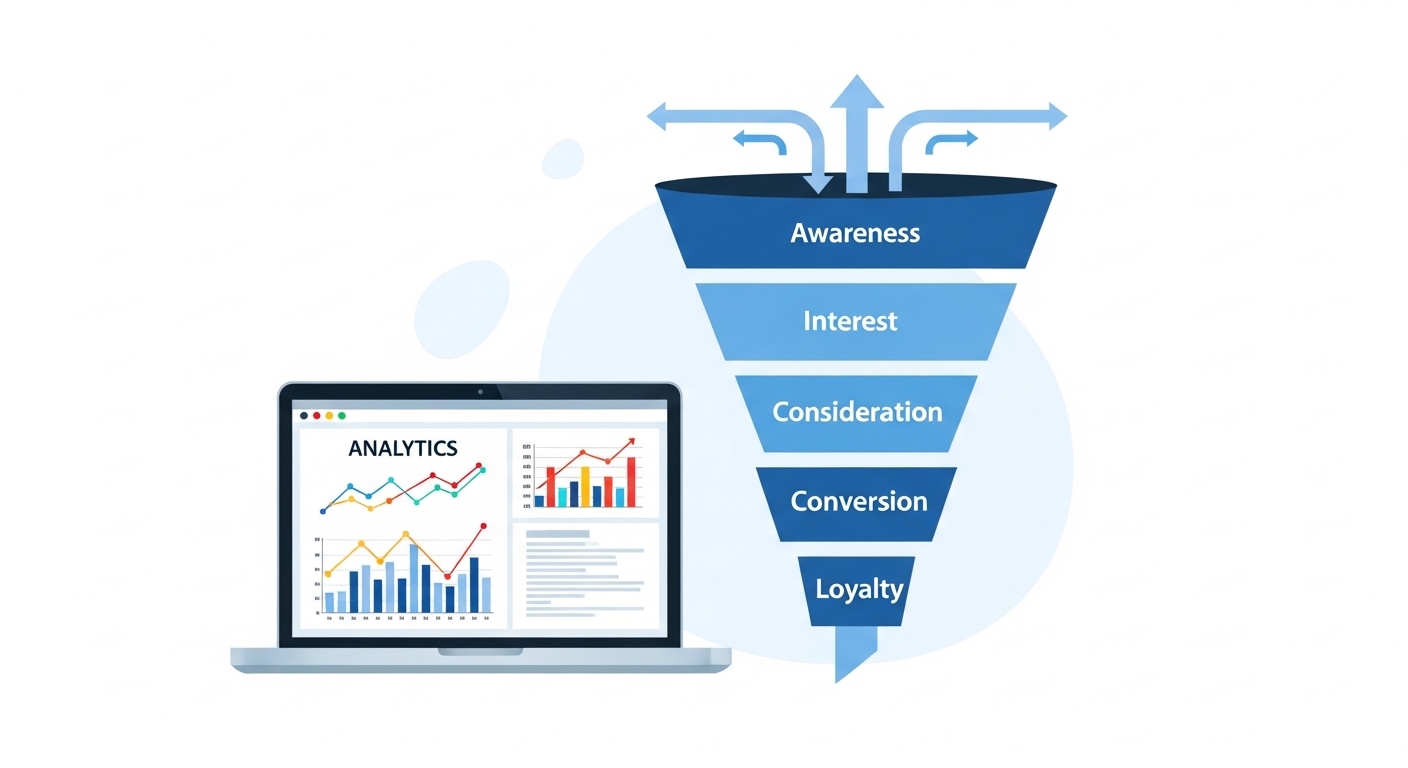
An online marketing funnel is a structured path that moves potential customers from awareness to purchase. It visually resembles a funnel because many people enter at the top, but only a smaller number convert into paying customers at the bottom.
The funnel works by delivering the right message at the right time. Instead of selling immediately, businesses nurture prospects with useful content, trust-building strategies, and targeted offers.
For example, many entrepreneurs running an online business rely on funnels to promote products in affiliate marketing programs or their own dropshipping business.
To understand how funnels work, it is helpful to break them into several stages.
The Core Stages of a Marketing Funnel
1. Awareness
The awareness stage is the top of the funnel. This is where people first discover your brand.
Traffic sources typically include:
- Search engines
- Social media platforms
- Paid advertising
- Content marketing
For example, a blog article comparing affiliate vs dropshipping could attract readers who are researching business opportunities.
SEO plays a major role here. Creating valuable content helps bring organic visitors to your site. Tools like Ahrefs marketing guides can help you understand keyword opportunities.
2. Interest
Once visitors land on your website, the next goal is to build interest. Instead of immediately pushing a sale, you should provide helpful information.
This can include:
- Educational blog posts
- Free guides or downloadable resources
- Email newsletters
- Video tutorials
At this stage, the objective is to demonstrate expertise. Visitors should begin to see your brand as a reliable source of information in your niche.
If your website focuses on entrepreneurship, you might explain how affiliate marketing works or how to start a dropshipping business.
3. Consideration
The consideration stage occurs when prospects evaluate whether they should buy from you.
This is the moment to provide deeper content, such as:
- Product comparisons
- Case studies
- Customer testimonials
- Detailed tutorials
For example, a detailed guide discussing affiliate vs dropshipping could help potential entrepreneurs decide which business model fits their goals.
By addressing common concerns and questions, you reduce uncertainty and move prospects closer to conversion.
4. Conversion
The conversion stage is where visitors become customers. This can involve purchasing a product, signing up for a service, or joining a paid membership.
Effective strategies at this stage include:
- Clear call-to-action buttons
- Limited-time offers
- Discount incentives
- Trust signals such as reviews
Entrepreneurs often monetize funnels through affiliate marketing links or products sold through a dropshipping business.
Platforms such as Shopify make it easy to launch eCommerce stores that integrate with marketing funnels.
5. Retention and Loyalty
A successful online marketing funnel does not stop after a sale. Retaining customers is far more cost-effective than acquiring new ones.
You can increase customer loyalty by:
- Sending follow-up emails
- Offering exclusive deals
- Providing premium content
- Creating loyalty programs
Customers who trust your brand are more likely to buy again and recommend your products to others.
Why Marketing Funnels Are Essential for Online Businesses
Many beginners attempt to sell products directly without a strategy. However, this approach often leads to poor conversion rates.
A structured online marketing funnel offers several advantages:
- Higher conversion rates
- Better customer targeting
- Scalable growth
- More consistent passive income
This is why successful entrepreneurs rely heavily on funnels when building a online business.
Tools Needed to Build a Marketing Funnel
Building an effective funnel requires the right digital tools. Fortunately, many platforms make the process easier.
Website or Landing Page Builder
Your funnel needs a destination where visitors can learn about your offer. Landing page builders help create high-converting pages.
Popular tools include:
- WordPress
- ClickFunnels
- Leadpages
Email Marketing Software
Email marketing is one of the most powerful funnel components. It allows you to nurture leads and build long-term relationships.
Examples of email marketing platforms include:
- Mailchimp
- ConvertKit
- ActiveCampaign
Traffic Generation Tools
You also need reliable traffic sources to feed your funnel.
Traffic strategies can include:
- SEO blog content
- Social media marketing
- YouTube tutorials
- Paid advertising campaigns
Many marketers publish educational articles comparing affiliate vs dropshipping or explaining affiliate marketing strategies to attract targeted readers.
How to Build a High-Converting Marketing Funnel
Step 1: Identify Your Target Audience
The first step in building a profitable online marketing funnel is understanding your audience.
You should research:
- Customer problems
- Search behavior
- Preferred platforms
- Buying motivations
This research helps you create content that resonates with potential customers.
Step 2: Create Valuable Content
Content is the engine that drives traffic into your funnel.
High-quality content examples include:
- Educational blog posts
- In-depth tutorials
- Product reviews
- Industry comparisons
For instance, a guide explaining the differences between affiliate vs dropshipping could attract entrepreneurs exploring new income opportunities.
Step 3: Capture Leads
Instead of letting visitors leave your website, encourage them to join your email list.
Lead magnets may include:
- Free ebooks
- Checklists
- Exclusive training videos
- Discount codes
This allows you to nurture leads and guide them deeper into your funnel.
Step 4: Nurture Prospects
After capturing leads, the next step is nurturing.
Email sequences can educate subscribers about your brand and build trust over time.
For example, you might send educational emails about starting an online business, scaling affiliate marketing, or launching a dropshipping business.
Step 5: Promote the Offer
Once trust has been built, introduce your offer.
This could be:
- An affiliate product
- A digital course
- An eCommerce product
- A subscription service
With a well-designed funnel, customers feel confident purchasing because they already trust your expertise.
Common Marketing Funnel Mistakes
Even experienced marketers sometimes struggle with funnel performance. Avoiding common mistakes can dramatically improve results.
Selling Too Early
Many beginners try to sell immediately after attracting traffic. However, visitors usually need time to trust a brand before buying.
Poor Audience Targeting
If your content attracts the wrong audience, conversion rates will remain low.
For example, people searching for affiliate vs dropshipping are often entrepreneurs researching business models, not customers looking for unrelated products.
Ignoring Email Marketing
Email marketing remains one of the highest converting channels in digital marketing.
Without an email list, you lose the opportunity to nurture leads and build long-term relationships.
Scaling Your Marketing Funnel
Once your funnel begins generating consistent sales, the next step is scaling.
You can grow your funnel by:
- Increasing SEO content
- Testing paid advertising
- Optimizing landing pages
- Adding new products
Successful marketers often operate multiple funnels simultaneously. Some promote products through affiliate marketing, while others expand their dropshipping business to additional niches.
Over time, a well-optimized funnel can generate reliable revenue streams and long-term passive income.
Final Thoughts
Building a successful online marketing funnel is one of the most effective ways to grow a profitable online business.
By guiding visitors through the stages of awareness, interest, consideration, conversion, and loyalty, you create a structured system that consistently generates sales.
Whether you are exploring affiliate marketing, launching a dropshipping business, or comparing affiliate vs dropshipping opportunities, a strong marketing funnel will dramatically increase your chances of success.
With the right strategy, tools, and content, your funnel can become a long-term asset that produces scalable revenue and sustainable passive income.
