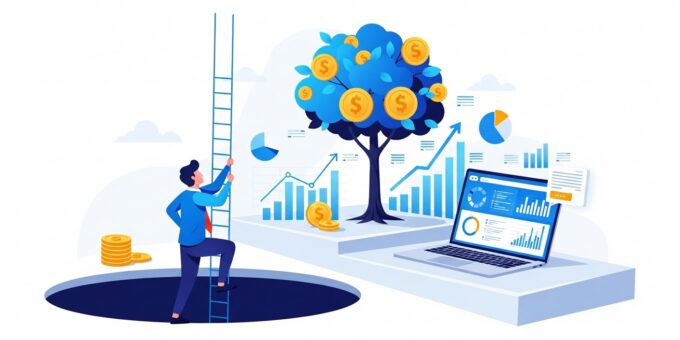
Learning how to reduce debt and build wealth using smart financial strategies is one of the most important steps toward long-term financial stability. Many people struggle with credit cards, loans, and rising living costs. However, with the right financial plan, you can eliminate debt while building assets that grow your net worth over time.
Smart financial strategies focus on disciplined budgeting, intelligent investing, and creating additional income streams. When applied consistently, these strategies help individuals move from financial stress to financial freedom. In this guide, you will learn proven methods to reduce debt, increase savings, and build wealth efficiently.
Understanding the Link Between Debt Reduction and Wealth Building
Debt and wealth move in opposite directions. The more debt you carry, the harder it becomes to accumulate assets. High-interest debt, especially credit cards, can drain your finances quickly and prevent you from saving or investing.
When you learn how to reduce debt and build wealth using smart financial strategies, you start redirecting money away from interest payments and toward wealth-building opportunities. These opportunities may include investments, retirement accounts, or income-generating ventures.
For example, many individuals create additional revenue streams through an online business. Popular models include affiliate marketing and running a dropshipping business. These digital income sources can help accelerate debt repayment while building long-term passive income.
Create a Clear Financial Plan
Track Your Income and Expenses
The first step in reducing debt is understanding where your money goes. Track every expense for at least one month. This includes bills, groceries, subscriptions, and discretionary spending.
Once you see the full picture, it becomes easier to identify areas where you can cut costs and redirect money toward debt repayment or investing.
Build a Practical Budget
A strong budget acts as a roadmap for your finances. One of the most effective budgeting methods is the 50/30/20 rule:
50% for essential expenses
30% for personal spending
20% for savings and debt payments
If you have significant debt, consider allocating more than 20% toward repayment until your balances are under control.
Use the Most Effective Debt Repayment Methods
The Debt Snowball Method
The debt snowball strategy focuses on paying off your smallest debts first while maintaining minimum payments on larger balances. Each time a debt is eliminated, the freed-up money rolls into the next payment.
This approach builds motivation because you see quick wins early in the process.
The Debt Avalanche Method
The debt avalanche strategy prioritizes debts with the highest interest rates. By eliminating high-interest debt first, you minimize the total amount of interest paid over time.
Both strategies can work effectively. The best method depends on whether you prefer psychological motivation or mathematical efficiency.
Increase Your Income to Accelerate Debt Reduction
Cutting expenses helps, but increasing income can speed up your financial progress significantly. Many people are now turning to digital income sources to support their financial goals.
Starting an online business is one of the most flexible ways to generate additional income. For example, entrepreneurs often compare affiliate vs dropshipping when choosing a business model.
In affiliate marketing, you promote products and earn commissions for every sale generated through your referral links. This model requires minimal upfront investment and can eventually produce passive income.
On the other hand, a dropshipping business allows you to sell products without managing inventory. When a customer places an order, a supplier ships the product directly to the buyer. Both models can help generate additional income that you can use to pay down debt faster.
For beginners exploring digital income opportunities, resources like
Shopify’s dropshipping guide
and
NerdWallet’s passive income strategies
provide helpful insights.
Build an Emergency Fund
Unexpected expenses are one of the main reasons people fall deeper into debt. Without an emergency fund, even a small financial shock can lead to additional credit card balances.
Start by saving at least $1,000 as a starter emergency fund. Once your debt is under control, aim to build savings that cover three to six months of living expenses.
This financial cushion protects you from setbacks and keeps your wealth-building strategy on track.
Invest While Paying Down Debt
Many people assume they must eliminate all debt before investing. While this may be true for high-interest debt, it is often beneficial to invest at the same time you are paying down moderate debt.
Investing allows your money to grow through compound returns. Over time, even small investments can grow significantly.
Examples of wealth-building investments include:
Index funds
Dividend stocks
Retirement accounts
Real estate investment trusts
When combined with disciplined debt repayment, investing can dramatically increase your long-term financial security.
Create Long-Term Passive Income Streams
One of the most powerful financial strategies is building reliable passive income. Passive income allows you to earn money without continuously trading time for income.
Examples of passive income sources include:
Dividend-paying stocks
Rental properties
Digital products
Affiliate marketing websites
Automated dropshipping business stores
Many entrepreneurs start a blog or niche website and monetize it through affiliate marketing. Over time, quality content can attract search engine traffic and generate recurring income.
Combining passive income streams with traditional employment income can significantly accelerate your journey toward financial independence.
Avoid Lifestyle Inflation
As your income grows, it is tempting to increase spending. This behavior, known as lifestyle inflation, often prevents people from building lasting wealth.
Instead of increasing expenses each time you earn more money, direct a portion of that income toward:
Debt repayment
Investments
Savings accounts
Income-producing assets
Maintaining a modest lifestyle while your income grows allows your wealth to compound faster.
Use Technology and Financial Tools
Technology can simplify money management and help you stay consistent with your financial plan.
Budgeting apps, investment platforms, and automated savings tools make it easier to track progress and avoid unnecessary spending.
Automation is especially helpful for saving and investing because it removes the temptation to spend money that should be growing your wealth.
Develop Long-Term Financial Discipline
Learning how to reduce debt and build wealth using smart financial strategies requires patience and discipline. Wealth does not grow overnight, but consistent actions can produce powerful results over time.
The most financially successful individuals follow simple habits such as:
Living below their means
Investing consistently
Avoiding unnecessary debt
Building multiple income streams
Many also diversify income through digital ventures like affiliate marketing or an automated dropshipping business. These models allow people to scale income without significantly increasing their working hours.
Final Thoughts
Understanding how to reduce debt and build wealth using smart financial strategies can transform your financial future. By combining disciplined budgeting, effective debt repayment methods, and strategic investing, you can steadily improve your financial position.
Increasing income through opportunities such as an online business, affiliate marketing, or a dropshipping business can further accelerate the process. Over time, building reliable passive income streams allows your wealth to grow even while you sleep.
Financial freedom is not about earning the highest salary. It is about making smart decisions with the money you already have. With consistent effort and the right strategies, anyone can reduce debt and build lasting wealth.
