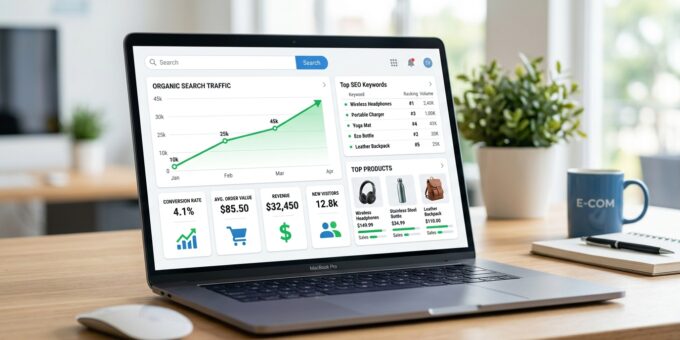
Learning how to use SEO to grow your e-commerce website traffic is one of the smartest ways to build long-term online growth. Paid ads can bring quick visitors. However, search engine optimization can bring steady traffic, better product visibility, and more sales over time.
For many store owners, SEO feels complex at first. Yet the basic idea is simple. You improve your website so search engines can understand it, rank it, and show it to the right shoppers. When your product pages appear for high-intent searches, you attract people who are already interested in buying.
This guide explains practical SEO strategies for e-commerce websites. It covers keyword research, product page optimization, technical SEO, content marketing, link building, and conversion-focused improvements.
Why SEO Matters for E-commerce Websites
E-commerce is competitive. Thousands of stores may sell similar products. Without SEO, your website can stay invisible even if your products are high quality.
SEO helps your store appear when shoppers search for products, comparisons, reviews, and buying guides. For example, someone searching “best running shoes for women” may not know your brand yet. If your category page or blog post ranks well, that search can become a sale.
Good SEO also supports other revenue models. Many websites combine e-commerce with affiliate marketing, product reviews, digital products, or ad monetization. This can increase passive income potential, especially when your content attracts consistent organic traffic.
If you are building an online business, SEO can become a valuable asset. Unlike paid campaigns, optimized pages can continue bringing visitors months or years after publishing.
Start with E-commerce Keyword Research
Keyword research is the foundation of e-commerce SEO. It helps you understand what your customers type into Google before they buy.
Begin with commercial keywords. These are search terms used by people who are close to making a purchase. Examples include “buy leather backpack,” “best wireless earbuds,” or “organic skincare set.” These keywords are valuable because they show buying intent.
Next, look for informational keywords. These are useful for blog content and buying guides. Examples include “how to choose a laptop bag” or “cotton vs polyester shirts.” These searches may not lead to an immediate sale, but they help attract future customers.
You can use tools like Google Keyword Planner, Google Trends, Ahrefs, Semrush, or Ubersuggest to find keyword ideas. Also check Google autocomplete, “People also ask,” and competitor websites.
Use Keywords Based on Search Intent
Search intent means the reason behind a search. This is important because not every keyword should target the same type of page.
Product keywords should usually lead to product pages. Category keywords should lead to category pages. Comparison keywords may work best as blog posts or buying guides.
For example, a keyword like “black leather tote bag” should point to a product or category page. A keyword like “leather tote bag vs canvas tote bag” is better for a blog article. Matching keywords with intent helps improve rankings and user experience.
Optimize Product Pages for Search and Sales
Your product pages are some of the most important pages on your e-commerce site. They need to rank well and convert visitors into buyers.
Start with a clear product title. Include the main keyword naturally, but avoid keyword stuffing. A title such as “Women’s Waterproof Hiking Jacket” is better than “Jacket Waterproof Hiking Women Outdoor Coat Best Jacket.”
Write unique product descriptions. Many stores copy manufacturer descriptions, which creates duplicate content. Instead, explain the product benefits, features, materials, sizes, use cases, and care instructions in your own words.
Use short paragraphs and bullet points where helpful. Shoppers scan pages quickly. Clear formatting can improve readability and reduce bounce rate.
Add SEO-Friendly Product Images
Images influence both SEO and conversions. Use high-quality product photos from different angles. Compress images so they load quickly. Also add descriptive file names and alt text.
For example, instead of uploading an image called “IMG_5478.jpg,” rename it to “black-leather-crossbody-bag.jpg.” For alt text, describe the product clearly, such as “black leather crossbody bag with gold chain strap.”
This helps search engines understand your images. It also improves accessibility for users who rely on screen readers.
Improve Category Pages
Category pages often target broad, high-volume keywords. For example, an online fashion store may target “women’s dresses,” “men’s sneakers,” or “summer handbags.”
To optimize category pages, write a short introduction at the top or bottom of the page. Explain what customers can find in that category. Include the main keyword naturally. Also add internal links to related categories.
For example, a page about women’s dresses can link to summer dresses, formal dresses, and casual dresses. This helps users explore your store. It also helps search engines understand your site structure.
You can also link from blog posts to category pages. For example, a blog post about “what to wear to a summer wedding” can link to your dress collection using an internal link such as summer dresses.
Create Helpful Blog Content
Blogging is one of the best ways to grow e-commerce traffic. Product pages usually target buyers who are ready to purchase. Blog posts can attract visitors earlier in the customer journey.
Useful blog topics include buying guides, product comparisons, tutorials, trend reports, gift guides, and problem-solving content. For example, a skincare store could publish “How to Build a Simple Skincare Routine” or “Best Moisturizers for Dry Skin.”
Content can also support higher ad revenue and affiliate opportunities. For instance, a post comparing affiliate vs dropshipping can attract people interested in building an online store. That content may earn from ads, email signups, or recommended tools.
Likewise, a guide about starting a dropshipping business can link to relevant e-commerce resources, platforms, or product research tools. When done honestly, this supports both readers and revenue.
Use Content Clusters
A content cluster is a group of related pages built around one main topic. For example, if your store sells fitness products, you could create a main guide about home workouts. Then you could add supporting posts about resistance bands, yoga mats, dumbbells, and recovery tools.
Each supporting article should link back to the main guide. The main guide should also link to related products and categories. This structure helps search engines understand topical authority.
Use Internal Linking Strategically
Internal links connect one page of your website to another. They help visitors discover more content. They also help search engines crawl your website.
Use internal links from blog posts to products, from products to related products, and from category pages to helpful guides. For example, a blog post about choosing a backpack can link to your travel backpack collection.
Use natural anchor text. Instead of writing “click here,” use descriptive text such as “waterproof travel backpacks.” This tells readers and search engines what the linked page is about.
Fix Technical SEO Issues
Technical SEO helps search engines crawl, understand, and index your website. It also improves the shopping experience.
First, improve site speed. Slow pages can reduce rankings and sales. Compress images, reduce unnecessary apps or plugins, and use reliable hosting. You can test performance with Google PageSpeed Insights.
Second, make sure your website is mobile-friendly. Many shoppers browse and buy from their phones. Your site should load quickly, display clearly, and make checkout simple on mobile devices.
Third, create a clean URL structure. A URL like “/collections/womens-running-shoes” is better than “/product-category?id=37492.” Clear URLs are easier for users and search engines to understand.
Finally, submit an XML sitemap in Google Search Console. This helps Google discover your important pages.
Add Structured Data
Structured data is code that gives search engines more information about your pages. For e-commerce sites, product schema is especially useful.
Product schema can include price, availability, reviews, brand, and product name. This can help your products appear with rich results in search. Rich results may show star ratings, prices, and stock status.
Many platforms, such as Shopify and WooCommerce, include basic structured data. However, it is still worth checking your pages with Google’s rich results testing tools.
Build High-Quality Backlinks
Backlinks are links from other websites to your website. They are still important for SEO because they can increase authority and trust.
For e-commerce stores, good backlink strategies include guest posting, digital PR, product reviews, expert roundups, and partnerships with bloggers. You can also create useful resources that people naturally want to reference.
For example, a sustainable fashion brand could publish a detailed guide about fabric care. A home decor store could publish a room size calculator or styling guide. Useful content is more likely to earn links than generic product pages.
Avoid buying low-quality links or joining spammy link schemes. These tactics can harm your rankings. Focus on relevant, natural links from trustworthy websites.
Use Customer Reviews for SEO
Customer reviews improve trust and can also support SEO. Reviews add fresh, user-generated content to product pages. They often include natural keywords, product details, and real customer language.
Encourage buyers to leave honest reviews after purchase. Make the process simple. You can send a follow-up email asking for feedback. Include photos and rating options if your platform supports them.
Reviews can also improve conversion rates. Shoppers often trust other customers more than brand claims. More trust can lead to more sales from the same traffic.
Optimize for Conversions, Not Just Traffic
Traffic alone is not enough. Your goal is to turn visitors into customers, subscribers, or leads.
Make your product pages clear and persuasive. Show prices, shipping details, return policies, and product benefits. Add strong calls to action, such as “Add to Cart” or “Buy Now.”
Use trust signals. These can include secure payment icons, customer reviews, guarantees, delivery information, and contact details. A visitor should feel safe buying from your store.
You can also use email capture forms. Offer a discount, free guide, or early access in exchange for an email address. This allows you to keep marketing to visitors who are not ready to buy today.
Track SEO Performance
SEO should be measured regularly. Use Google Search Console to track impressions, clicks, rankings, and indexing issues. Use Google Analytics or another analytics tool to track traffic, conversions, revenue, and user behavior.
Review your top pages every month. Look for pages that get impressions but low clicks. These may need better titles and meta descriptions. Also find pages that get traffic but few sales. These may need stronger product copy, better images, or clearer calls to action.
SEO is not a one-time task. It improves through testing, updating, and refining.
Common E-commerce SEO Mistakes to Avoid
Many store owners make the same SEO mistakes. One common issue is duplicate product descriptions. Another is targeting keywords that are too broad or too competitive.
Thin content is also a problem. Product pages with only one sentence may struggle to rank. Add useful details, FAQs, size guides, and benefits where relevant.
Another mistake is ignoring out-of-stock products. If a product is temporarily unavailable, keep the page live and suggest alternatives. If it is permanently discontinued, redirect it to a relevant category or replacement product.
Final Thoughts
Knowing how to use SEO to grow your e-commerce website traffic can help you build a stronger and more profitable store. Start with keyword research. Then optimize product pages, improve category pages, publish helpful content, and fix technical issues.
SEO takes time, but the results can be powerful. With consistent effort, your store can attract more organic visitors, build trust, and increase sales without relying only on paid ads.
Whether you run a product store, an affiliate marketing site, a dropshipping business, or another type of online business, SEO can support long-term growth. Focus on helping shoppers first. Search engines are more likely to reward websites that provide clear, useful, and trustworthy content.
